Patanjali Electric Scooter: The 200Km range claim instantly makes people calculate charging days, because longer range directly reduces weekly charging tension. The 100Km/h top speed line adds confidence for ring roads and flyovers, even if most daily riding stays within city limits. The ₹10,000 down payment number creates instant attraction because it lowers the mental entry barrier for buyers who want an EV but fear big upfront spending. That is why this topic is spreading fast—people imagine fixed monthly EMI plus low per-km running cost in one clean commuter package.
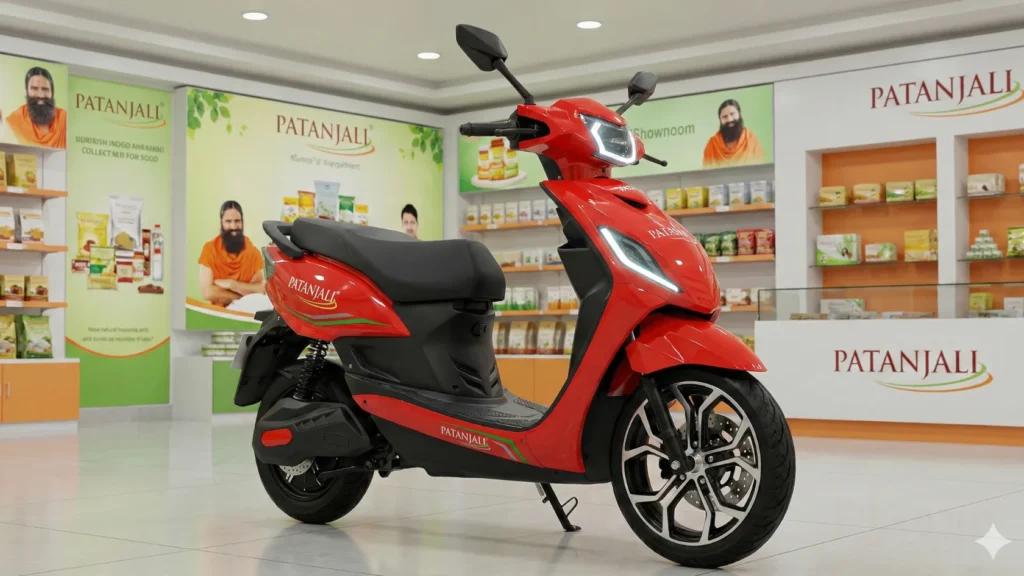
Modern Design and Practical Exterior
The scooter is being talked about with a simple, commuter-focused EV design rather than flashy styling. A long seat and wide floorboard matter because family riders often carry a pillion and daily bags. LED lighting improves night visibility and makes the scooter feel modern on the road. Build strength matters because Indian roads test panel quality, and a stable chassis matters because higher speed demands confidence. Tyre width, suspension tuning, and underbody protection become important for broken patches and speed breakers. For daily city use, water resistance and durable wiring are critical for monsoon riding and long-term reliability.
Interior and Riding Comfort
For an EV scooter, “interior” really means riding posture and daily comfort. A comfortable seat height and relaxed handlebar position reduce fatigue in traffic. A clear digital display showing speed, battery percentage, and remaining range in Km becomes essential because range planning defines daily confidence. Storage practicality matters because commuters carry office bags, lunch boxes, and groceries. Smooth suspension behaviour matters because rough roads are common. The quiet EV riding feel also improves comfort by reducing vibration during long commutes.
Battery and 200Km Claimed Range
A 200Km range figure immediately changes charging routine planning. At 20Km per day, 200Km equals 10 days per charge, and at 30Km per day, it equals 6.6 days on paper. Real-world range depends on speed, rider weight, traffic, tyre pressure, and riding mode, so mixed usage usually settles below the claimed figure. The real win is fewer charging days per month and a predictable routine that replaces petrol refills. For most households, long range matters more than extreme speed.
Charging and Performance
Home charging convenience decides daily ownership comfort because most riders charge overnight using a normal socket. Charging time depends on battery size and charger rating, but safe and consistent charging matters more than fast numbers. Daily performance is judged by 0–50Km/h pickup and stable cruising at 55–70Km/h. The 100Km/h top speed adds confidence, but real comfort comes from chassis balance and braking strength at usable speeds. Smooth throttle response and predictable control become the real performance benefit for commuters.
Safety and Technology Features
Safety and tech value depend on usability. Strong LED lights improve visibility. Reliable braking and good tyres matter because EV scooters carry extra battery weight. A distraction-free display helps with range planning. Riding modes help balance range and response. Battery and motor warranty clarity matters because these decide long-term cost. Service reach matters because downtime breaks daily routine. Middle-class buyers count safety and service support as real features, not extras.
Price, Down Payment and EMI Reality
The scooter is being discussed with a ₹10,000 down payment, which psychologically pulls buyers in. EMI depends on final on-road price, loan tenure, and interest. On a 60-month plan at around 12% interest, an EMI near ₹1,900–₹2,200 typically supports a loan of about ₹80,000–₹90,000. That means if the on-road price sits around ₹1.10–₹1.25 lakh, the total down payment would realistically land higher than ₹10,000 once insurance and charges are added. With electricity priced near ₹8 per unit and a running cost band of about ₹0.12–₹0.20 per Km, 1,000Km monthly usage can stay close to ₹120–₹200. That is why the mix of low initial down payment talk, manageable EMI expectation, and long range creates strong middle-class buzz.